The One Tool Every Homeowner Reaches For
A cordless drill is the most used power tool in any household. Hanging shelves, assembling IKEA furniture, mounting TV brackets, driving deck screws, drilling pilot holes, tightening loose hardware. If you own or rent a home, you'll use this tool more than anything else in your toolbox combined.
We tested four cordless drills across 6 months of real projects: a deck rebuild, bathroom renovation, furniture assembly, and routine household fixes. The differences between drills come down to motor type, battery platform, and how much torque you genuinely need for the work you do.
Quick Comparison
| Model | Weight | Motor | Battery | Max Torque | Price |
|---|---|---|---|---|---|
| DeWalt DCD771 | 3.6 lbs | Brushed | 20V MAX | 300 UWO | ~$100 |
| Milwaukee M18 | 3.9 lbs | Brushless | M18 18V | 500 in-lbs | ~$170 |
| Makita XFD131 | 3.4 lbs | Brushless | 18V LXT | 440 in-lbs | ~$150 |
| Black+Decker 20V MAX | 3.4 lbs | Brushed | 20V MAX | 250 in-lbs | ~$55 |
Our Top Pick: DeWalt DCD771
The DCD771 earns our top spot because it handles every typical homeowner project without struggle and costs under $100 with battery and charger included. The two-speed gearbox provides fine control for delicate screw driving on low and enough RPM for drilling holes on high. Torque at 300 UWO drives 3-inch deck screws into pressure-treated lumber without bogging.
The 20V MAX battery platform is the real long-term value. DeWalt's ecosystem includes over 200 tools that share the same batteries. Buy this drill today and you can add an impact driver, circular saw, or reciprocating saw later without buying new batteries. That ecosystem lock-in sounds limiting but actually saves hundreds of dollars over time.
Battery life on the included 1.3Ah packs runs about 40-50 heavy screws per charge. For a deck project, grab the 2.0Ah upgrade pack. For furniture assembly and wall mounting, one charge covers multiple projects easily. The compact size fits in tight spaces and weighs little enough for extended overhead work without arm fatigue.
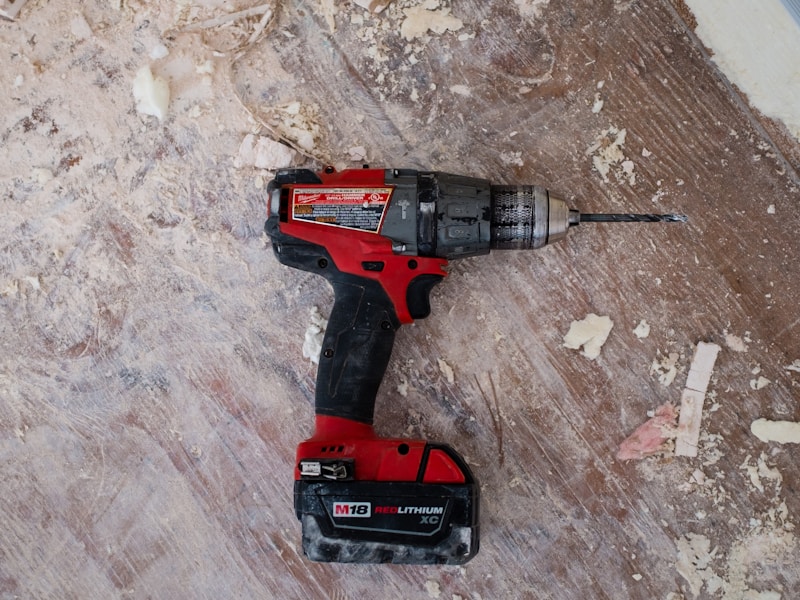
Best for Heavy Work: Milwaukee M18 2801-22CT
When your projects involve hardwood, concrete, lag bolts, or anything that makes a basic drill whine and strain, the Milwaukee M18 brushless steps up. The brushless motor runs cooler under load, delivers more torque without overheating, and wastes less energy in friction. You feel the difference immediately when driving long screws into dense material.
The M18 battery system is Milwaukee's flagship platform with 250+ compatible tools. Build quality is professional-grade: metal gear housing, all-metal chuck, and a motor designed for daily contractor use. At 3.9 pounds it's slightly heavier, but that mass comes from the beefier internals that justify the $170 price.
If your weekend projects regularly involve framing, heavy deck work, or drilling into masonry with a masonry bit, this is the drill that won't disappoint. For hanging pictures and assembling bookshelves, it's more tool than you need.
Most Compact: Makita XFD131
The XFD131 is the drill to get when you work in tight spaces or spend time drilling overhead. At 3.4 pounds and the shortest overall length in this group, it fits into cabinet interiors, between wall studs, and under sinks where larger drills won't reach. The brushless motor adds efficiency: expect 30% more work per charge compared to brushed drills with equivalent batteries.
Makita's 18V LXT system offers over 300 compatible tools. The build quality reflects Japanese engineering: metal gear housing, precise 1/2-inch chuck, and a clutch with 16 settings for dialing in exact torque. At $150, you're paying for the compact form factor and brushless longevity. Both are genuine advantages if you use the drill weekly.
Budget Pick: Black+Decker 20V MAX
The Black+Decker 20V MAX exists for the homeowner who needs a drill for occasional tasks and refuses to overthink the purchase. At $55 or less (frequently on sale for $40), it drives screws into drywall, drills pilot holes in softwood, assembles flat-pack furniture, and handles the light household tasks that constitute 80% of what most people use a drill for.
Limitations are honest: the brushed motor lacks the torque for hardwood or long screws in dense material. The chuck wobbles slightly more than premium drills. Battery life is shorter at 1.5Ah. But for hanging curtain rods, mounting towel bars, and putting together IKEA shelves, this drill does exactly what you need at a price that requires zero deliberation.
How to Choose the Right Cordless Drill
Battery platform is a bigger decision than the drill itself. Pick a brand whose ecosystem has the other tools you might want. DeWalt, Milwaukee, Makita, and Ryobi all have 200+ tools per platform. Switching platforms later means replacing every battery you own.
Brushed vs brushless motor. Brushless motors last 3-5x longer, run cooler, and deliver more runtime per charge. They cost $30-60 more. Worth it if you use the drill weekly or plan to keep it for a decade. Not necessary for monthly occasional use.
Chuck size matters. 1/2-inch chucks accept all standard drill bits and most driver bits without adapters. Some compact drills use 3/8-inch chucks that limit your bit selection. Every drill in this guide has a 1/2-inch chuck.
Two-speed gearbox is non-negotiable. Low gear for driving screws with control. High gear for drilling holes quickly. Any drill without two speeds will strip screws or drill too slowly. All four picks include this.
Who Should Own a Cordless Drill
Everyone who lives in a home or apartment. A cordless drill handles 90% of household tasks and eliminates the need for a separate screwdriver set for anything beyond electronics. The first time you assemble a bookshelf in 20 minutes instead of 90 minutes with a manual screwdriver, the purchase pays for itself in time saved.
If you already own a corded drill from a decade ago, the upgrade to cordless is worth the convenience. No extension cords, no tangled cables, no searching for outlets behind furniture.
Durability and Battery Care
The DeWalt DCD771's brushed motor has carbon brushes that wear out after 3-5 years of regular use. Replacement brushes cost $8 and take 5 minutes to swap. The Milwaukee and Makita brushless motors have no brushes to wear, lasting 7-10 years under normal homeowner use.
Store lithium-ion batteries at partial charge (40-60%) in moderate temperatures. Batteries degrade fastest when stored fully charged in hot environments like a summer garage. This single habit extends battery lifespan from 3 years to 5+ years. Never leave batteries on the charger permanently after they reach full charge.
Final Verdict
The DeWalt DCD771 is our top pick because it handles every common homeowner task, costs $100 with batteries included, and connects you to a massive tool ecosystem for future expansion. Step up to the Milwaukee M18 for heavy-duty projects that strain budget drills. Choose the Makita XFD131 for the tightest form factor and brushless efficiency. Or grab the Black+Decker 20V MAX for under $55 when you need a drill that works without overthinking the investment.